Wednesday, October 23, 2013

A Flushing Dilemma

I have been perplexed at times, while traveling in Europe, about a task I consider here at home to be pretty straightforward - flushing the toilet.  I remember when I was a child, entering a public restroom in Europe was often a mystery.  What sort of medieval plumbing contraption was I required to push, pull, turn, yank or crank to finish the job I came to do?

Take, for example, the lavatory below, frequently encountered in many European countries:


If you haven't chanced upon a pull chain device such as this before, certainly you might search all around the commode looking for a button or lever to flush.  If you are a young child, you undoubtedly wouldn't think to look up to do the job.  And if and when you finally do, there's the likelihood - as in this photo, that you possibly cannot even reach it.

Europeans have gone green, way more than we have here in the U.S., and although we are starting to see dual flush toilets here, the different varieties of mechanisms will cause you pause each and every time.


And, of course, you know I have to bring up everyone's favorite foreign commode:  the squat toilet, also known as the Natural Position toilet (yeah, right, natural for men maybe).  Are these still found in civilized countries?  Yes!  The photos below were taken by my friend recently in Italy.  I've encountered them as well in Greece, Hungary, and even France.


If you have a young daughter, do not let her attempt to use a squat toilet without your help.  I never managed these latrines as a child without tinkling all over my pants and shoes.  And let's just say the germs your child might come into contact with if you're not there to avert a slip or a fall would probably warrant a tetanus booster.

Sometimes in a foreign restroom you will read a sign, occasionally in legible English, asking you not to place toilet paper in the trash receptacle.  You may wonder why the need to elucidate such an obviously nonsensical idea.  That is because there are some countries with poor or no plumbing where you WILL be asked to deposit your toilet paper in the trash receptacle because flushing it will clog the toilet.

Men, like always in these matters, have little difficulty finding a place to go in Europe.  Public urinals are an accessory to many historical buildings in Europe, such as this ancient looking urinol adjacent to the Castle of São Jorge in Lisbon (below) and another near the historic center of Gouda, in the Netherlands (also below).

Public urinal in Lisbon.

Urinal in Gouda, the Netherlands.

And always remember to have a bit of spare change on you when entering a WC in Europe because you never know when you might be caught by surprise by a Klofrau wanting to wipe down the seat for you!

Friday, September 27, 2013

UNESCO Town of Évora in Portugal


When an entire town is named a UNESCO World Heritage Site, you know it's going to be an interesting place, and that is the reason we chose to make an overnight stop in Évora on our trip through Portugal last summer.  Medieval city walls, an ancient Roman temple, a 16th century aqueduct, a Gothic cathedral, and even more fascinating history await visitors to this town located about an hour and a half drive from Lisbon.  


After a little bit of a glitch with our accommodations but then finally checking into a lovely hotel, we realized we were just around the corner from the remains of Temple Diana, Évora's most famous landmark.


This Roman temple survived the ages since its construction around the first century A.D. because it was put to various uses since the Middle Ages and regularly restored.  It is considered one of the best preserved Roman ruins on the Iberian peninsula.


View of Temple Diana from the Évora Cathedral.

Besides the Romans, the Moors left their mark on Évora as well.  The city was under Moorish rule for over 400 years.

Dom Manuel Palace

Moorish ruins.

Being the avid steeple climbers that we are, we gladly paid the 13€ for four of us to climb the Évora Cathedral tower up to the roof.


The views over the town are magnificent, as the church was built on the highest point in the city.


The cathedral, a blend of Romanesque and Gothic style architecture, was built in 1186.  It is believed that the flags of Vasco da Gama's first ships to the Orient were blessed here.  Very unique to the Évora Cathedral is the very pretty lantern tower over the crossing with its picturesque windows and six little turrets surrounding the spire.


The central square in town is Praça do Giraldo and it's a nice place to stop for a cool drink or bite to eat.  We had dinner at Café Arcada, which has a large diner sort of feel, and their menu pleased everyone in our family.

Praça do Giraldo is Évora's central square.

Before you leave town be sure to browse the shopping alleys.  Beautiful items crafted from local cork are great souvenirs.


On your way out of town, you can visit the Aqueduct of Silver Water which stretches for 6 miles and was built in the 1530s to deliver water to the city of Évora.

You can drive right through the aqueduct's arches.

Wednesday, September 4, 2013

10 Best Airlines in the World

I am currently skimming The 10 Best of Everything by Nathaniel Lande and Andrew Lande.


Interesting, their list of the 10 best airlines in the world, which they give in random order:

American Airlines (hmmm...not my personal favorite)
Cathay Pacific Airways
Thai Airways International
Air New Zealand
Malaysia Airlines
Japan Airlines
Midwest Airlines
British Airways
Singapore Airlines
Air Malta & Aegean Airlines

We'll be flying British Airways to Europe next summer, so I'll be able to judge them for myself, but how about you?  Do you agree with this list?

Sunday, August 25, 2013

Visiting Madrid With Kids

Puerta del Sol in Madrid

When I think of Madrid I think of hot.  Hot, dry, summer temperatures.  This capital of a country with over 5,000 miles of coastlines is probably farther from a cool ocean breeze than any other city in Spain. Just come prepared for the heat, plan a daily siesta, and see all there is to see in Madrid.

Puerta del Sol
Madrid is a walking city - everything is best explored on foot.  The Plaza Mayor and Puerte del Sol are very near each other - both off the Calle Mayor - and a good place to start your tour of the town.  Puerte del Sol is, in fact, the symbolic center of Spain, as so marked by the kilómetro cero, a plaque on the ground in front of the post office from which distances in the country can be measured.  (I've seen these in Paris and Budapest, too.)  The Puerte del Sol is a busy, bustling square with a couple of landmarks such as the old post office and the statue of the bear and madrone tree.

Kilómetro cero

Bear and madrone tree - symbol of Madrid.

Plaza Mayor
A short distance away is Plaza Mayor, an enormous rectangular central plaza enclosed by residences with lovely balconies and an equestrian statue of Philip III in the center.  The most notably beautiful section of the buildings is the Casa de la Panadería with hand-painted frescoes on its façade.  Plaza Mayor used to be the site of bullfights and public executions, but now there are restaurants and shops and just general strolling.


Mercado de San Miguel
If you're hungry, you can troll for some tapas in nearby Mercado de San Miguel, a covered market where you can sample just about any little Spanish delicacy you desire, or rehydrate with some fresh-squeezed juice (or maybe sangria?)

Tapas at Mercado de San Miguel.

Royal Palace
Madrid's Royal Palace is a stunning site to visit.  Built in the 1700s, it was home to several royal families, but is now only used for award ceremonies, royal audiences, banquets, and other special events.  The Changing of the Guard is an interesting ceremony for younger children especially, and it's held every Wednesday at 11:00 a.m. except in the summer months.  Our family took an audioguide tour that covered the interior and exterior grounds.  I love the grand Almudena Cathedral right across the plaza from the palace.

In the courtyard of the Royal Palace, Madrid.

Almudena Cathedral, as seen from the palace courtyard.

Chandelier in the Royal Palace.

Retiro Park
When temperatures soar in Madrid, a nice place to cool off is Retiro Park at the edge of the city center.  Shady and wooded, this park offers relaxation as well as activities.  There are play structures for children, free summer concerts on Sundays, street performers and puppet shows.  Rowboats can be rented and paddled around in the large artificial pond next to the spectacular King Alfonso XII monument.

Large semicircular collonnade monument to King Alfonso XII.

Prado Museum
On the same side of town as Retiro Park is the famous Prado Museum.  Goyas and El Grecos as well as Dutch masters fill the beautiful building and are worth a look, especially after 6:00 p.m. on Mondays through Saturdays when admission is free!  (Also free on Sundays after 5:00 p.m.)

Prado Museum in Madrid.

Snacks
For a late afternoon snack while walking around town, pick up some convent cookies from Convento de Corpus Christi or take a coffee break at Chocolatería San Ginés, the most famous churro bakery in Madrid.


Bullfighting
My husband and I attended a bullfight at Madrid's Plaza de Toros many, many years ago, and although we appreciated the cultural beauty of the art, we were mortified when the dead bull was dragged out of the arena.  Still, my kids insisted they wanted to see a bullfight.  Fortunately or unfortunately, there weren't any scheduled when we were in Madrid.  You can check performance dates and buy tickets here.

Plaza de Toros de las Ventas in Madrid

Evening Strolls
We liked taking evening walks around Madrid's Parque de la Montaña, where you will find - of all things - a 2nd century B.C. Egyptian temple that was gifted to Spain in the 1960s.  At this park you can also enjoy brilliant views of the Royal Palace at night.


Related posts:
Convent Cookies
Local Artists
Chocolatería San Ginés
Madrid Atocha Railway Station
Egyptian Temple in Madrid

Monday, August 19, 2013

Sleeping Cabin on the Train from Lisbon to Madrid


Oddly enough, the only direct train from Lisbon to Madrid, and vice versa, is a night train.  So, since we had no other way to get from the capital of Portugal to the Madrid airport for our flight home, we booked a 4-person sleeping cabin for $110 per person.  Expensive, I know.  When you compare our crowded, bumpy, noisy, 11 hour night on the train with a stay in an equally expensive luxury hotel, it's a little depressing.  But the experience was valuable for my kids, and I'd do it again.

I slept fine (with just a little help from a good pair of earplugs and a double dose of Advil PM), and my son and daughter said they slept alright.  But my husband had trouble.  He's about 6'1", and the bed was too short for him.  The beds are also somewhat narrow.  He said he hardly slept at all.


As you can see from my photos, the cabins are narrow with little room for luggage.  The bed linens are okay and the blankets aren't needed because the room gets stuffy and warm in the summer.  In the corner is a small sink with running water and each passenger is provided a little gift pack which includes earplugs, a bar of soap, a travel toothbrush and toothpaste.  Nice touch, I think.  We felt very safe because the door had a lock as well as a security chain.  I did tell the kids to wake one of us up if they had to go to the bathroom at night, though, just to be cautious.

My husband and daughter, who are early risers, strolled up to the dining car before dawn and had breakfast.  They both agreed it was a good meal, with fresh rolls and orange juice.  My daughter particularly enjoyed watching the sunrise from the train as the Spanish countryside swished by outside the window.

Friday, August 9, 2013

I Spy the London Eye


As if a city with dungeons, pageantry, drawbridges, double-decker buses, and very large ravens wasn't enough fun for families with children, in 1999 London erected what was at that time the largest Ferris wheel in the world, right on the banks of the River Thames.  The London Eye, as it's known, is a must-do activity whether you're visiting the city with or without kids.

The passenger pods can each carry 25 people, and - believe it or not - they are air-conditioned.  (The Europeans are catching on!)  Passengers are free to walk around inside the oval-shaped, all-glass capsules, but there are benches to sit if you like.

View of a capsule from a capsule.

Seating inside the London Eye's passenger pods.

The most fabulous reason to take a ride on the London Eye is, of course, the 360° panorama of the city.  Views of the House of Parliament and its grand and noble Big Ben tower are a particular highlight from the top of the wheel.


The best way to see Big Ben.

Did you know that you can book your own private capsule package?  You can create your own theme party with food, dessert, or wine on board.  The London Eye also offers a chocolate and truffle tasting private experience, a wine tasting party, and a champagne tasting experience.  Of course, if you're just interested in a standard 30-minute ride, prices are £19.20 for those over 16, £12.30 from 4-15 years old, and free for children under 4.  A family of four ticket is £63.00.  Online ticket purchases offer a savings of up to 20%.


On a clear day, the views are endless.

Friday, August 2, 2013

Lisbon Oriente Train Station

Did you know that Lisbon's Oriente train station is as busy as Grand Central Terminal in New York?

Lisbon Oriente Station

On the train platform.

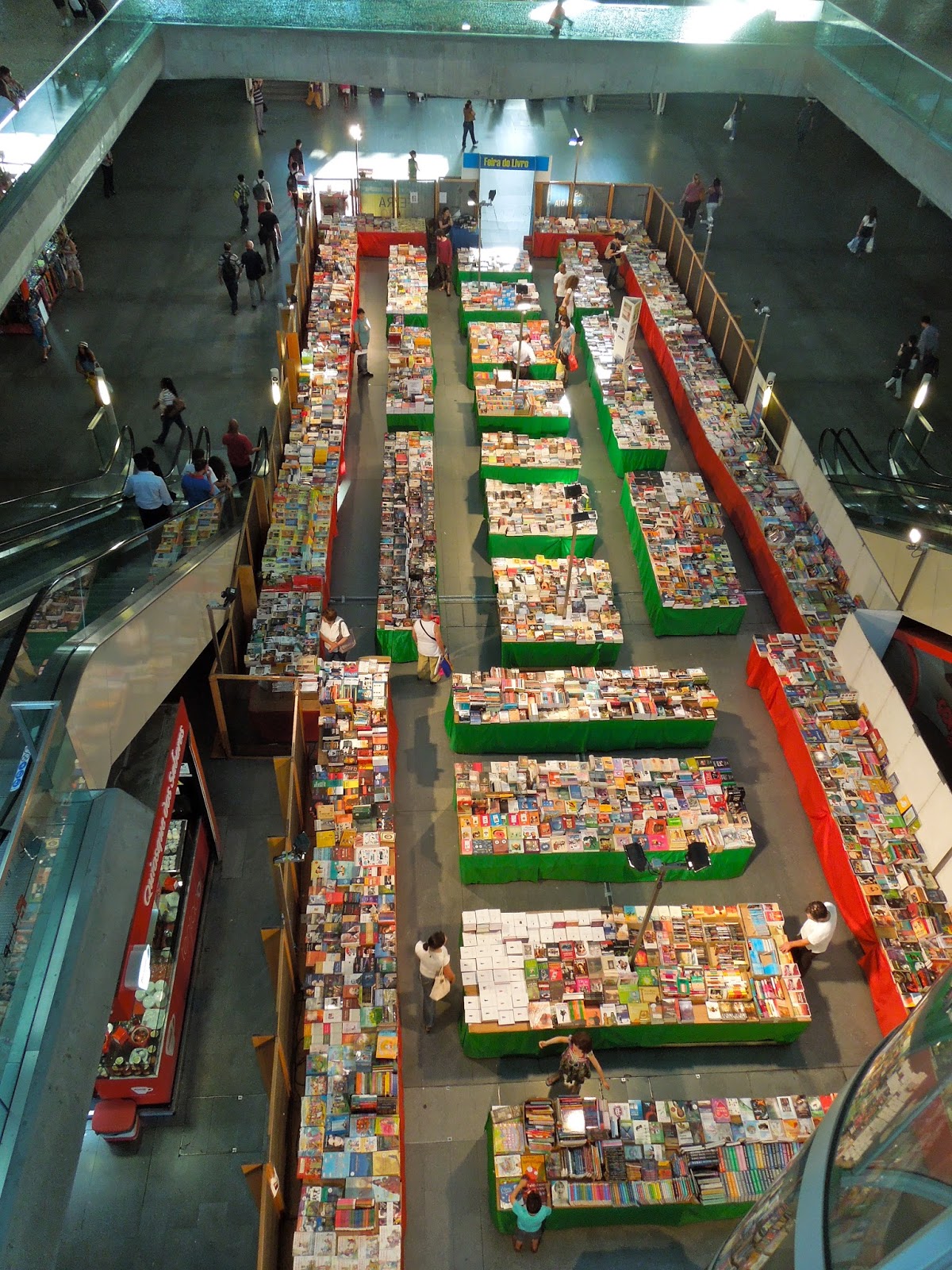
Books for sale inside the station.

My daughter looks like an alien standing in the inner gallery of the Lisbon Orient Station.

This is my Photo Friday link-up post at DeliciousBaby.com.
Related Posts Plugin for WordPress, Blogger...